
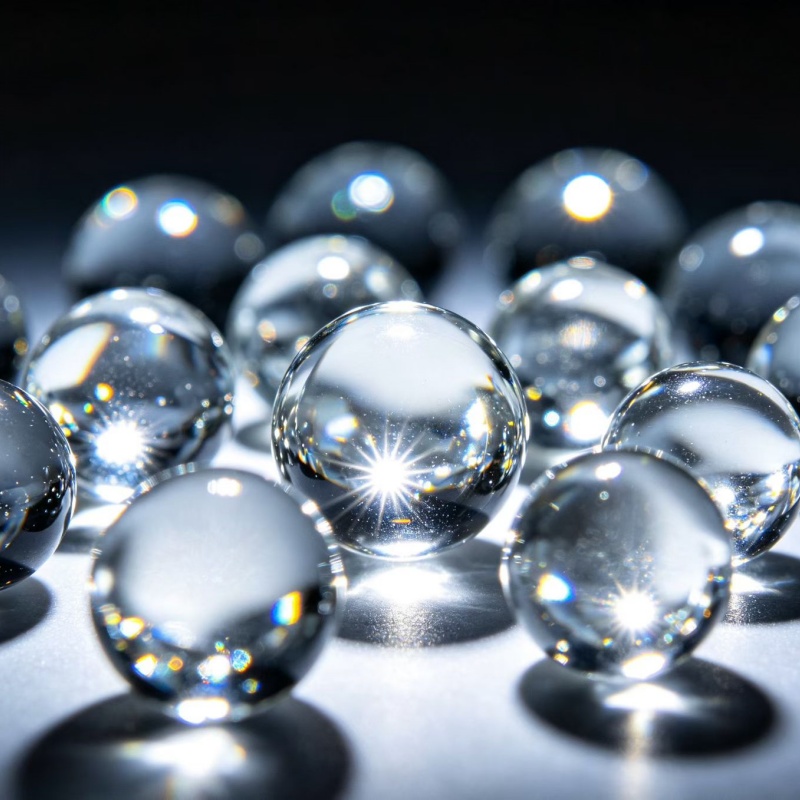
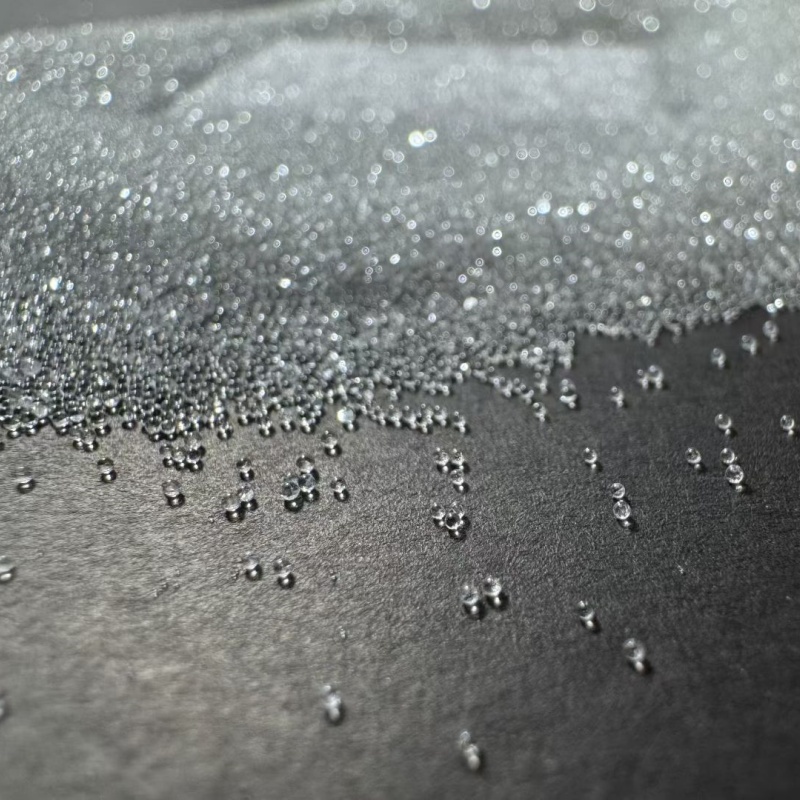
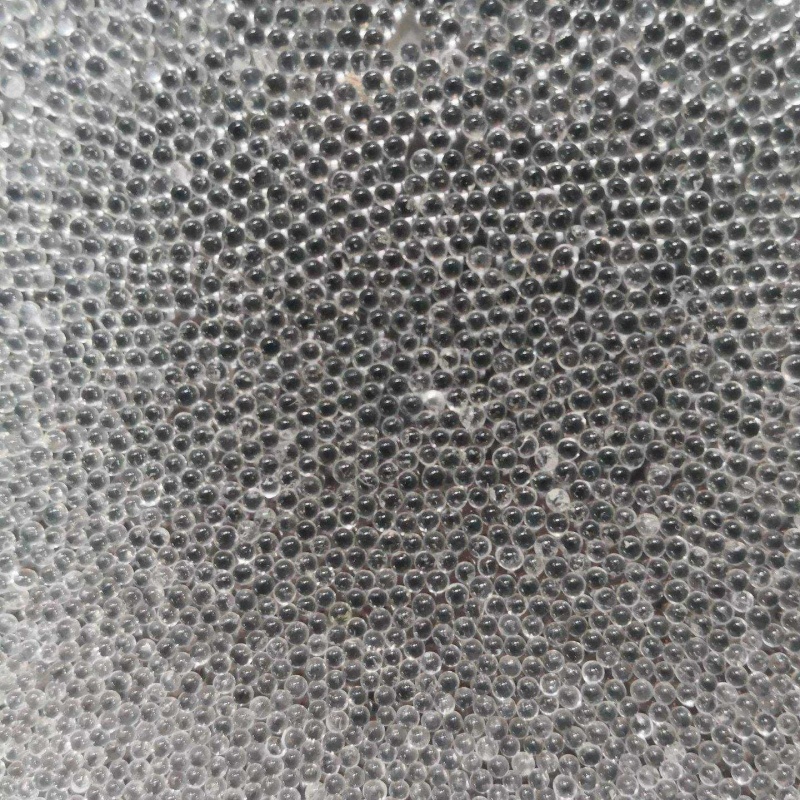
Glass beads are micron-sized, highly spherical glass particles produced by melting and atomizing glass powder at high temperature, then allowing the molten droplets to naturally form spheres through surface tension. They are mainly divided into solid glass beads and hollow glass beads.
Glass beads are widely used in reflective road markings, shot peening and polishing, plastic lightweight modification, thermal insulation filling, and electronic packaging. Their particle size generally ranges from 1 μm to 1000 μm, which distinguishes them from large decorative glass beads, angular glass sand, and crushed glass raw materials.
A general-purpose and economical type.
A high-end material used for solid and hollow glass beads.
These glass beads are modified with TiO₂, BaO, ZrO₂, Bi₂O₃ and other components.
| Item | Solid Glass Beads | Hollow Glass Beads |
|---|---|---|
| Internal Structure | Dense solid structure | Thin-walled hollow structure, wall thickness about 1–2 μm |
| Bulk Density | 2.4–2.6 g/cm³ | 0.1–0.6 g/cm³, extremely lightweight |
| Compressive Strength | High | Medium to high, resistant to shell collapse |
| Thermal Conductivity | Standard | Very low, excellent for insulation and sound reduction |
| Typical Uses | Road reflection, shot peening, polishing, fillers | Lightweight composites, insulation, buoyancy materials |
The most widely used type, including road marking beads, shot peening glass beads, filler beads, and colored glass beads.
Also known as hollow glass microspheres, these are lightweight borosilicate powder materials designed for high-end lightweight applications. They are often called “space-age materials.”
Commonly used for road marking applications.
Colored solid glass beads are produced by body coloring or surface coating. They are used in colored road markings, artistic flooring, resin crafts, nail art, and decorative products.
Crushed glass or glass raw materials → grinding → particle size classification → high-temperature flame melting and atomization → droplets form spheres through surface tension → air quenching and cooling → annealing and stress relief → screening and grading → optional surface coupling modification → packaging
Borosilicate glass raw materials → preparation of glass powder containing foaming agents → high-temperature suspended sintering → internal gas expansion forming sealed hollow cavities → rapid cooling and shaping → classification and purification → surface hydrophobic modification
This is the largest application field of glass beads. Based on the principle of retroreflection, light from vehicle headlights enters the glass beads and is reflected back toward the driver, making road markings visible at night.
Applications include highways, municipal roads, parking lots, zebra crossings, directional arrows, reflective cones, reflective films, safety vests, and sanitation workwear.
Solid glass beads are spherical and have no sharp edges, so they do not easily scratch the workpiece. They are suitable for precision surface treatment.
Compared with angular glass sand, glass beads provide gentler treatment and do not aggressively damage thin-walled workpieces. They can also be recycled and reused.
Solid glass beads improve hardness, wear resistance, surface smoothness, and dimensional stability. They also help reduce shrinkage and warping. Common applications include home appliance housings, shoe soles, engineering plastics, and artificial stone.
Hollow glass beads are a key material for lightweight modification.
Typical applications include automotive lightweight interiors, bumpers, new energy battery housings, fiberglass boat hulls, and surfboards.
Used in lightweight structural composites, thermal insulation layers, and weight-reduction components for aircraft.
Used in deep-water buoyancy materials, low-density cementing slurry, offshore floating bodies, and pressure-resistant buoyancy balls for deep-sea equipment.
Used in lightweight thermal insulation mortar, fireproof insulation coatings, and low-density foamed concrete.
Used in sound insulation felt and pipeline sound-absorbing coatings. The hollow structure helps block sound wave transmission.
Glass beads can also be used in filtration media, solid-phase carriers for chromatographic analysis, artificial agate and artificial marble aggregates, scented candle fillers, and mosaic inlay materials.
Standard packaging includes 25 kg woven bags and jumbo bags. High-end hollow glass beads are packed with inner film sealing for moisture protection.
Store in a dry, ventilated warehouse with sealed packaging. Hollow glass beads should be protected from heavy pressure to prevent breakage. Road marking beads should be kept away from moisture to avoid caking and ensure smooth application.