
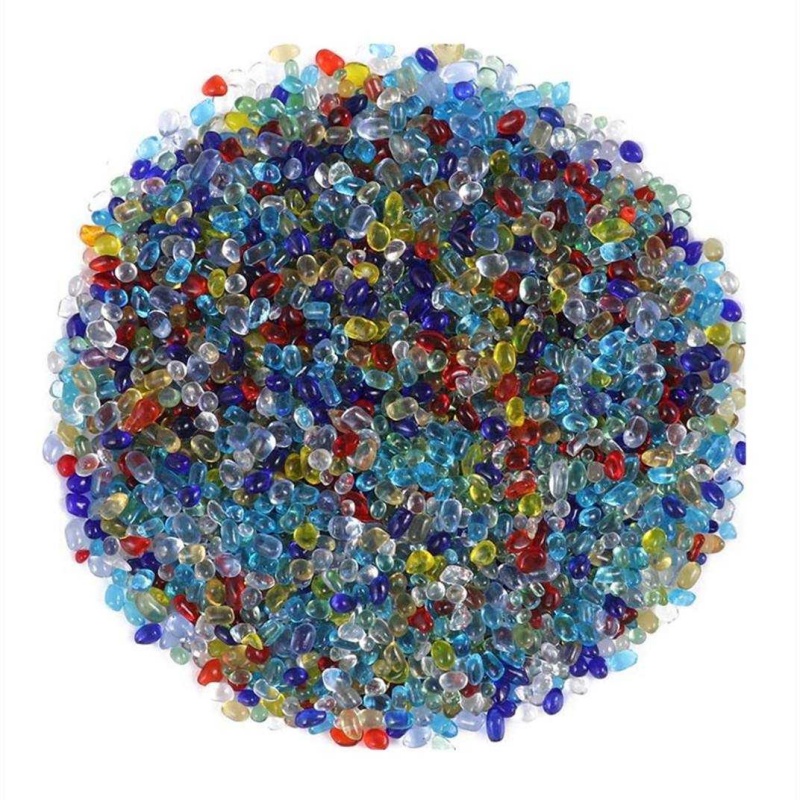
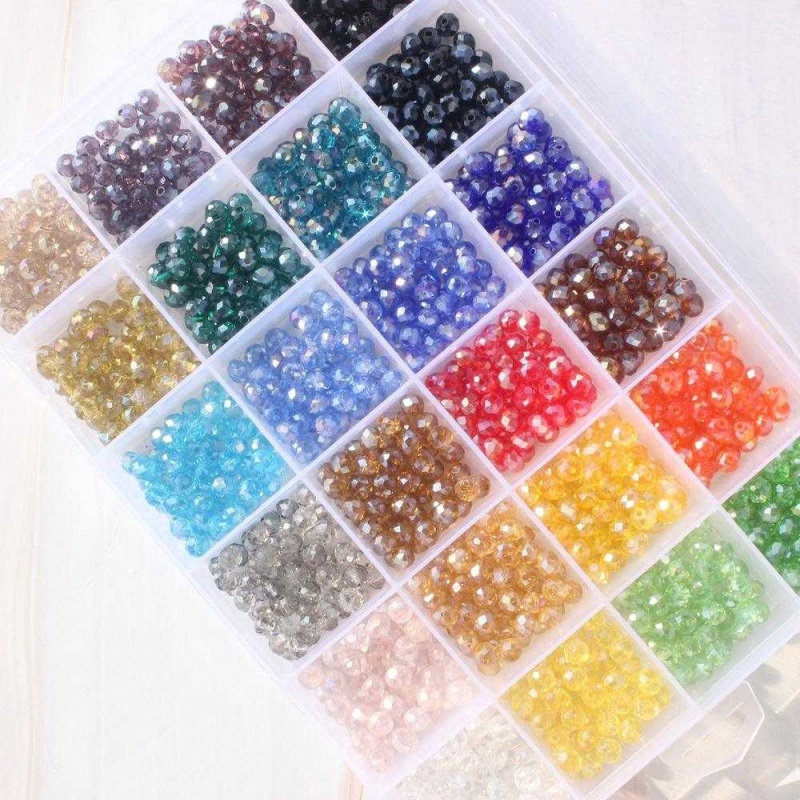
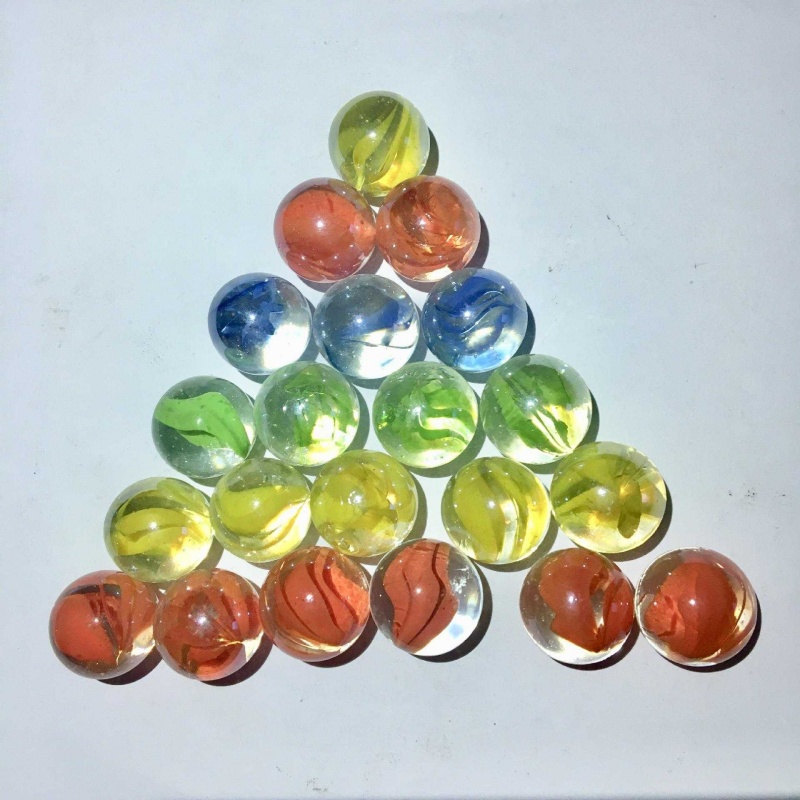
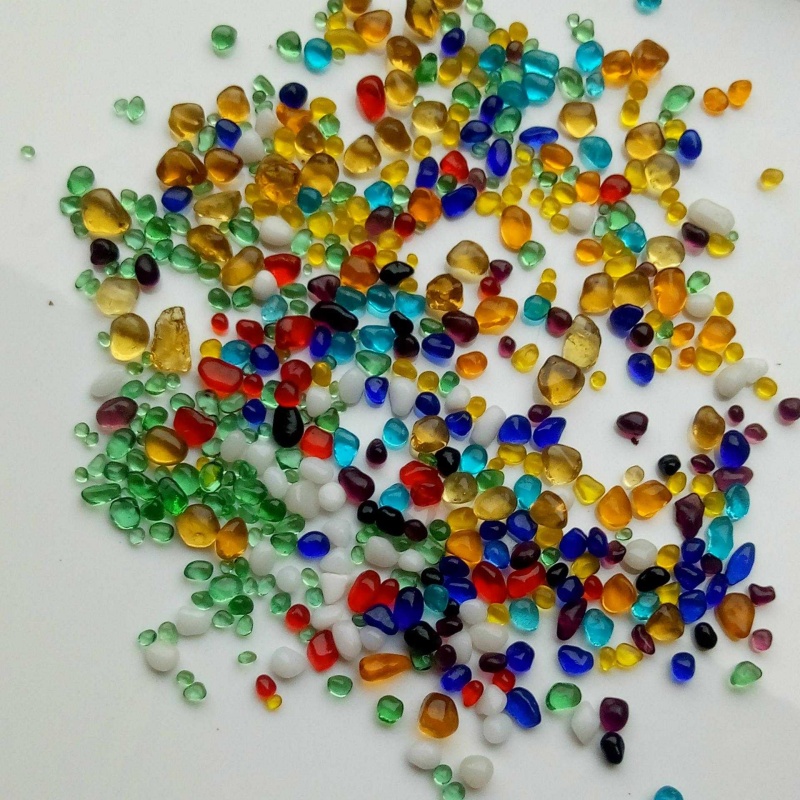
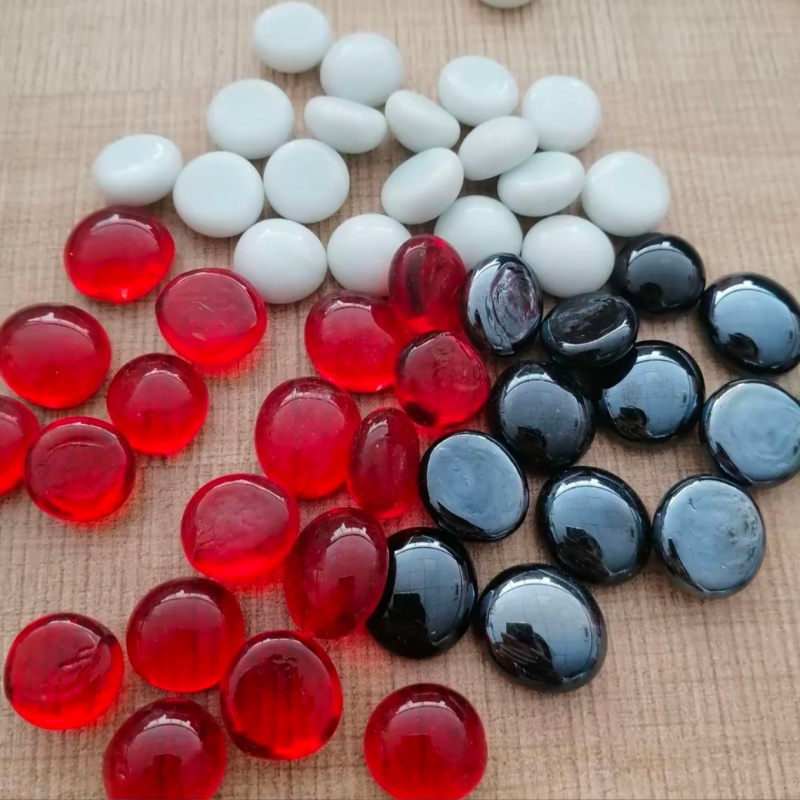
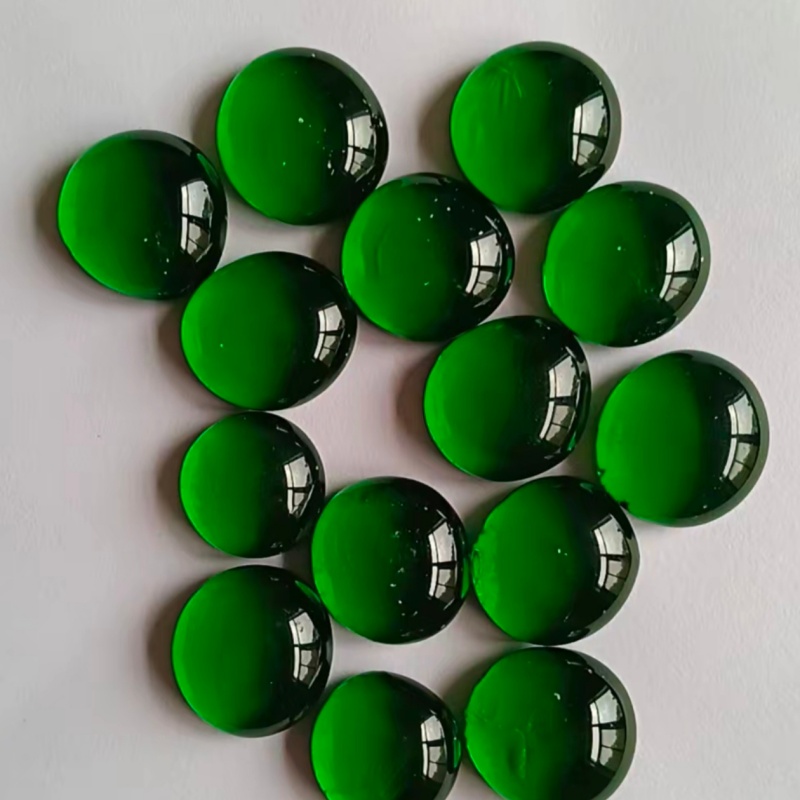
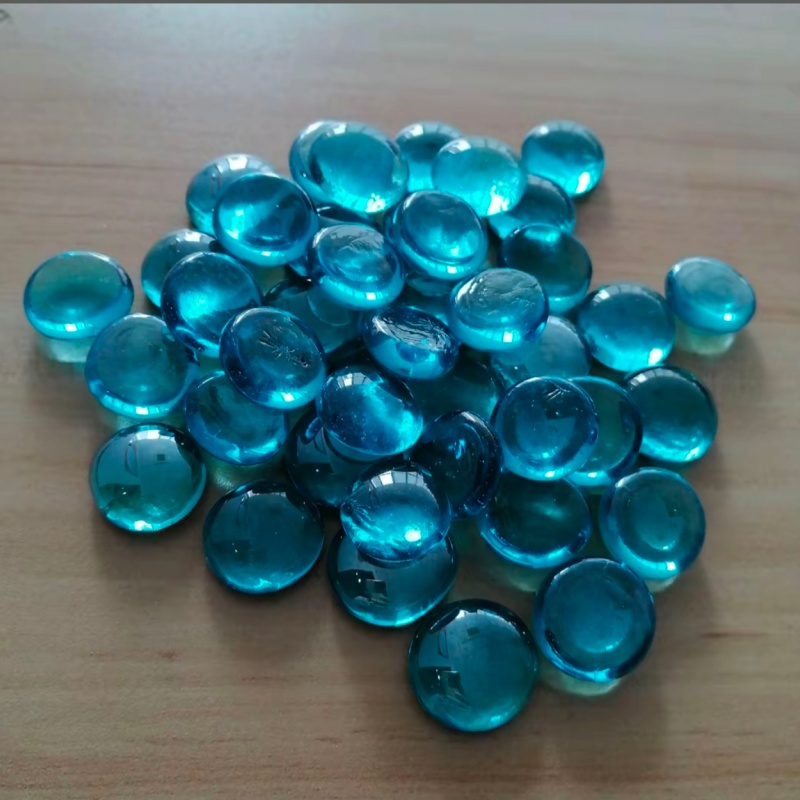
Colored glass beads are spherical glass particles made from soda-lime glass or lead crystal glass. They are colored either by adding metal oxides during melting or by applying surface coatings after forming. Through high-temperature melting, bead forming, cooling, screening, polishing, and drilling, they are processed into smooth and colorful glass beads.
Colored glass beads can be divided into four main types: tiny seed beads, standard jewelry beads, large marbles, and industrial solid microbeads. They feature high roundness, stable colors, water resistance, sunlight resistance, and smooth surfaces. They are widely used in jewelry, decoration, industrial filling, landscaping, and craft applications. Unlike angular glass sand, colored glass beads have a regular spherical shape.
This is the most common type, accounting for about 90% of general glass bead products.
Common applications include landscaping, general jewelry, decorative filling, and flooring aggregates.
Used for high-end jewelry and crystal-like decorative products.
Commonly used for premium bracelets, jewelry, inlays, and decorative accessories.
Special high-temperature-resistant beads.
This is the higher-quality coloring method. Metal oxides are added during the melting stage, allowing the color to penetrate the entire bead body.
Common color sources include:
Because the color runs through the whole bead, the bead will not reveal a white base after surface wear.
This is a more economical coloring method. Clear or white beads are processed by baking paint, electroplating, spraying, or AB rainbow coating.
The color is mainly on the surface, so long-term friction may cause slight coating wear.
Common sizes: 1.5 mm, 2 mm, 3 mm, 4 mm.
Usually drilled with small holes and used for bead embroidery, hair accessories, clothing decoration, tassels, and handmade jewelry.
Common sizes: 6 mm, 8 mm, 10 mm, 12 mm.
These are the main specifications for bracelets, necklaces, earrings, keychains, and hanging ornaments.
Common sizes: 8–20 mm.
Used for aquarium bottom decoration, vase filling, resin crafts, and mosaic inlays.
Common sizes: 16 mm, 25 mm, 35 mm.
Used for vintage marble games, game machines, decorative displays, and potted plant landscaping.
Common sizes: 0.4–1 mm.
Used for flooring aggregates, reflective coatings, ink filling, and nail art decoration.
These beads have a small hole through the center and can be strung with fishing line, elastic cord, cotton rope, or metal wire. They are mainly used for jewelry and accessories.
These beads are dense and have no holes. They are used for landscaping, bottom filling, resin casting, flooring aggregates, and game marbles.
These beads have a hollow internal structure and are lightweight. They are used for floating decoration, fragrance filling, drift bottle decoration, and lightweight decorative applications.
Fully colored beads with strong coverage, including creamy white, macaron colors, and jade-like textures.
Colored beads with good transparency, creating ice-like or jelly-like visual effects.
Beads with a soft pearl coating, giving a warm matte finish without strong glare.
Also known as aurora beads. They have an interference coating on the surface and reflect rainbow colors from different angles.
Matte surface finish created by sandblasting, offering a premium low-gloss texture and reduced fingerprints.
Colored glass threads, petals, or spiral patterns are embedded during melting, creating classic vintage marble styles.
Machine-cut beads with multiple faces, providing a sparkling crystal-like effect and serving as an alternative to crystal stones.
Colored glass beads are available in many styles, including:
Used for seed beads and solid-color round beads.
Raw material mixing and melting → glass liquid cut into measured droplets → centrifugal rolling into spheres → annealing to remove internal stress → rough polishing → cleaning and impurity removal → body coloring or surface coating → drilling for jewelry beads → grading and screening → drying and packaging
Used for high-end specialty beads.
Glass rods are melted with a flame torch → multi-layer coloring and pattern embedding → hand shaping or hollow blowing → slow annealing → fine polishing
Each handmade lampwork bead has a unique pattern.
Clear glass base material melting → colored glass strips added and rotated together → cooling and shaping to form internal spiral, petal, or cat-eye patterns → overall polishing and finishing
This is one of the largest application fields.
Colored glass beads are regular spherical particles, while colored glass sand is angular and irregular.
Glass beads have very high roundness, while glass sand has no roundness requirement.
Glass beads are mainly used for jewelry, bottom decoration, displays, and crafts. Glass sand is mainly used for sandblasting, flooring aggregates, and filter media.
With the same material and weight, glass beads cost much more to process than glass sand.
Glass beads are smooth and rounded, while glass sand has sharper edges.