
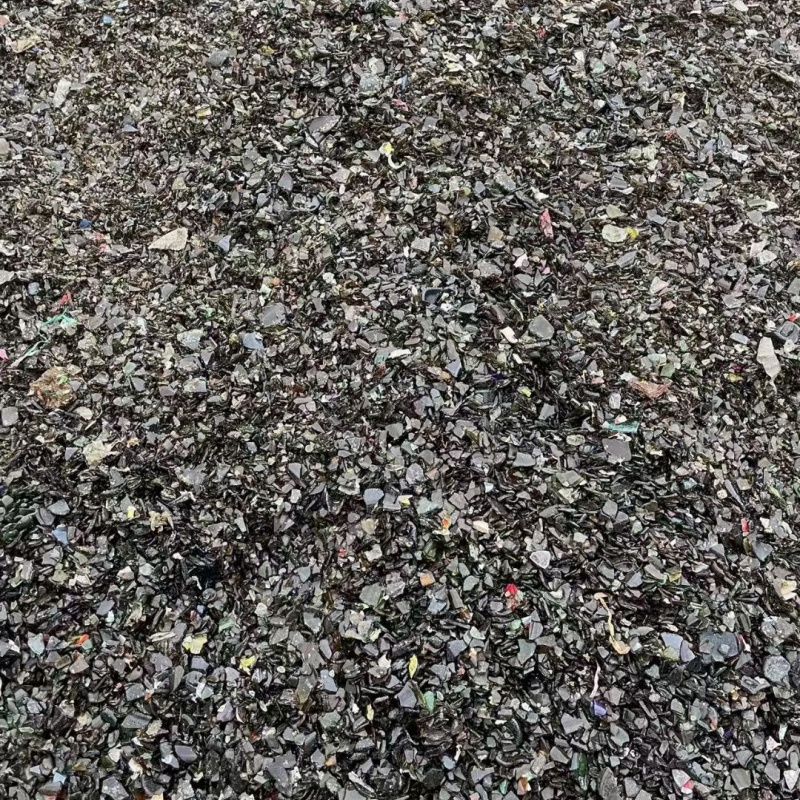
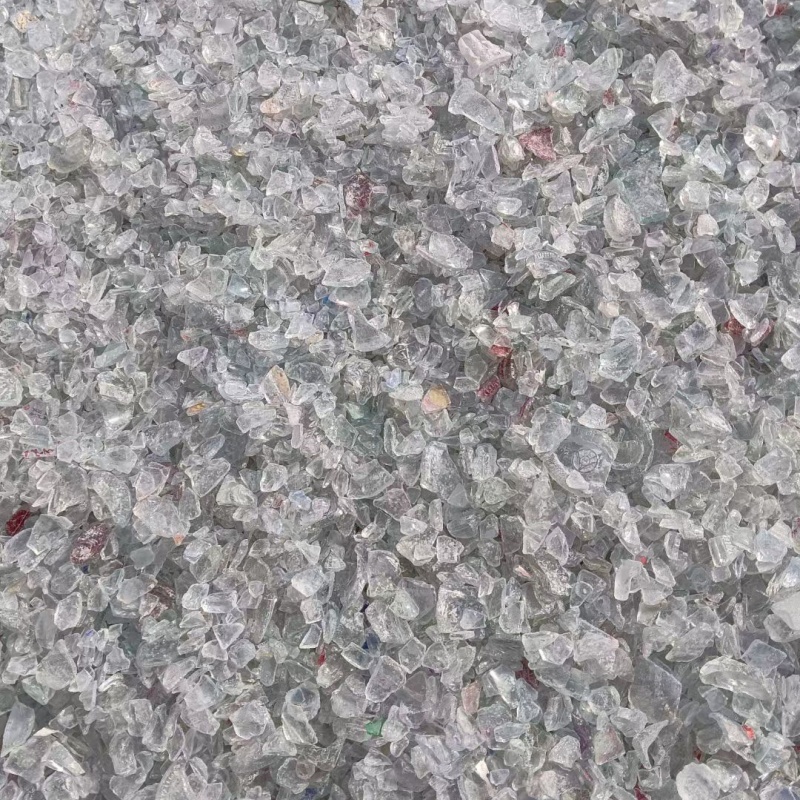
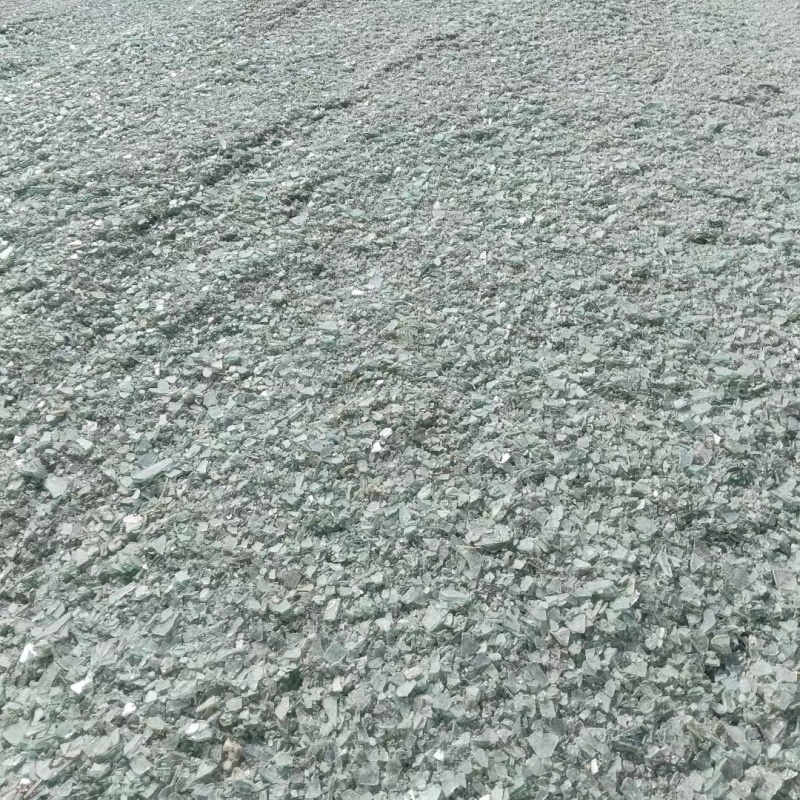
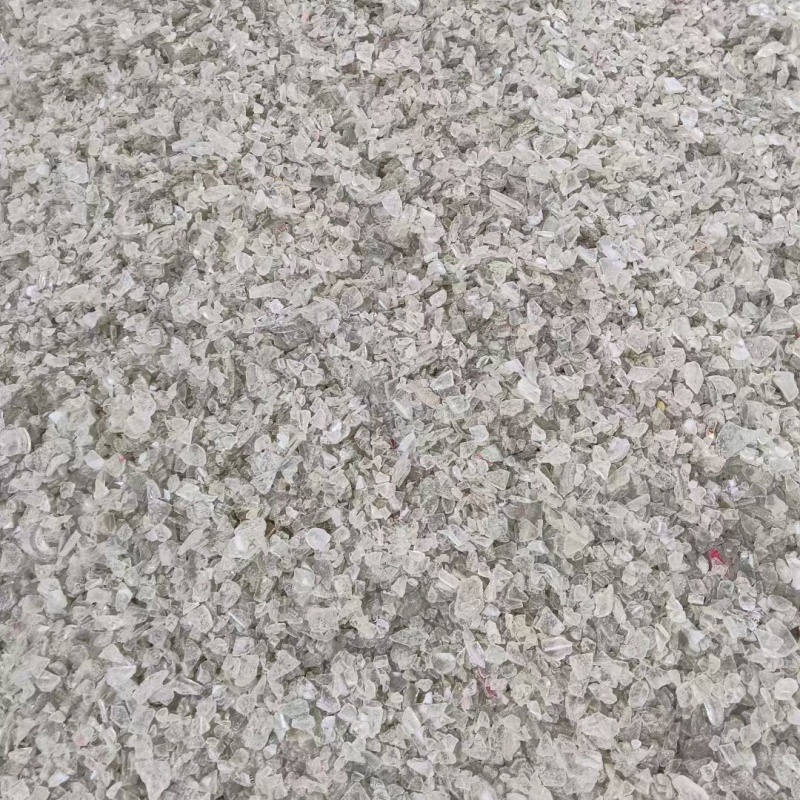
Crushed glass, also known as waste glass or glass cullet, refers to irregular glass fragments, blocks, and particles produced by crushing various discarded glass products. It is one of the most important recycled raw materials in the glass industry and also serves as an upstream material for glass sand, glass beads, and colored aggregates.
Crushed glass can generally be divided into two major categories: industrial glass production scraps and post-consumer recycled glass. Its applications cover glass remelting, building materials, sandblasting, decorative filling, chemical fillers, and other industrial fields.
For mainstream soda-lime glass:
Special glass cullet, such as borosilicate glass, lead crystal glass, quartz glass, coated glass substrates, and photovoltaic glass, has different compositions and must be sorted separately.
Crushed glass has no fixed shape. It may appear as large blocks, sheets, strips, or sharp-edged fragments. After crushing and screening, it can become angular particles. With further processing, it can be made into rounded glass sand or glass microbeads.
Includes liquor bottles, mineral water bottles, clear float glass, and cosmetic glass bottles. It has the highest value and is preferred by glass manufacturers.
Mainly from beer bottles and green beverage bottles. It has large market volume and wide circulation.
Commonly from medicine bottles, soy sauce bottles, and canned food containers.
Includes architectural window glass, tempered glass, curtain wall glass, and automotive glass.
Includes glass cups, bowls, tableware, and common craft glass.
Includes lead crystal, borosilicate heat-resistant glass, LCD glass substrates, coated mirrors, and photovoltaic cover glass. These materials must be recycled separately and must not be mixed with ordinary crushed glass.
Single-color, clean glass with no mixed colors, plastics, ceramics, metals, sand, or other impurities. It can be directly reused in glass furnaces.
Contains a small amount of mixed color glass, with impurities below 0.5%. It can be mixed into the furnace in controlled proportions.
Mixed-color glass with small amounts of labels, rubber, aluminum caps, and other impurities. It is mainly used for building materials, aggregates, and rough processing.
If mixed colors account for more than 30%, it is generally unsuitable for high-end glass melting and is mostly used for construction additives, road paving, and flooring aggregates.
| Type | Particle Size | Typical Applications |
|---|---|---|
| Large Glass Fragments | >50 mm | Initial recycling and sorting |
| Coarse Crushed Glass | 10–50 mm | Road paving, concrete aggregates, low-end backfilling |
| Medium Crushed Particles | 1–10 mm | Glass furnace cullet, terrazzo aggregates, sandblasting raw materials |
| Fine Crushed Glass Sand | 0.1–1 mm | Filter media, epoxy flooring aggregates, textured paint fillers |
| Glass Powder | <0.1 mm | Cement additives, resin filling, ceramic raw materials, ink fillers |
Refined processing is the key to increasing the value of crushed glass. The more detailed the processing, the higher the added value.
This is the largest application of crushed glass, accounting for about 61% of total usage. Glass cullet can be melted together with quartz sand and soda ash to reduce furnace energy consumption.
Crushed glass can be used as an alternative aggregate and additive in construction materials.
Irregular colored crushed glass is used for mosaic inlays, artistic casting, wall art panels, and dry creek landscaping. Its transparent and reflective texture creates a decorative visual effect.
Used as a covering flux for molten steel and copper to isolate air and prevent oxidation.
Used in wastewater treatment and artificial wetland filter layers. It is corrosion-resistant and not easy to compact.
Can be remelted and drawn into glass fibers for wall anti-cracking mesh and thermal insulation glass wool.
Crushed glass that is heavily mixed and difficult to sort can be used as landfill bedding or backfill aggregate. It should not be randomly discarded outdoors, as the sharp edges may cause injuries.